 how-to
How to Maintain Chainsaw Engine: A Step-by-Step Guide
Table of Contents
- Pre-Use Inspection and Safety Checks
- Chainsaw Air Filter Cleaning and Replacement
- Chainsaw Spark Plug Maintenance and Inspection
- Chainsaw Fuel Mix and Storage Best Practices
- Chainsaw Carburetor Cleaning and Adjustment
- Guide Bar and Chain Care for Engine Longevity
- Seasonal Storage and Off-Season Engine Protection
- Troubleshooting Common Chainsaw Engine Problems
- Conclusion
- Frequently Asked Questions
Last Updated: October 19, 2026
Pre-Use Inspection and Safety Checks
Take five minutes before starting your chainsaw to learn how to maintain chainsaw engine systems by inspecting the engine and safety components, catching problems before they become expensive failures.
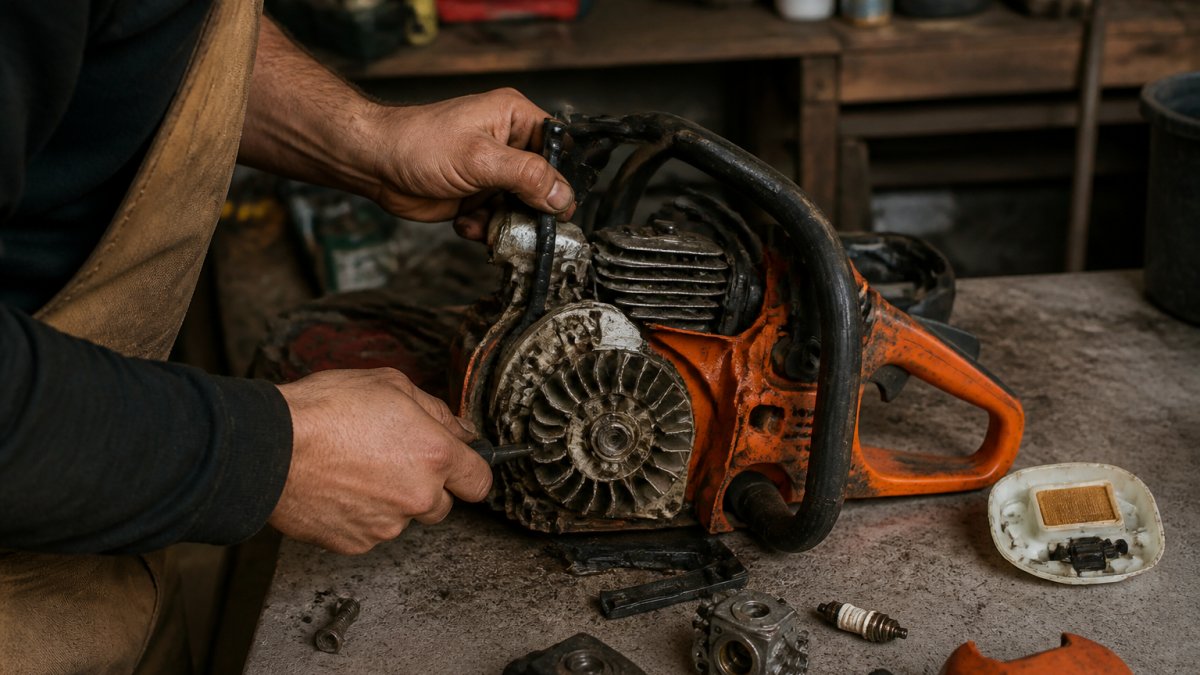
Check the fuel and oil caps for cracks or loose threads, and keep the engine's cooling fins clean and debris-free. Confirm the chain catcher and safety devices are intact, the fuel tank has no leaks, and the air intake isn't clogged.
Run your fingers along hoses and connections; any fuel smell or oil residue signals a leak. Listen for unusual rattles when you gently shake the saw.
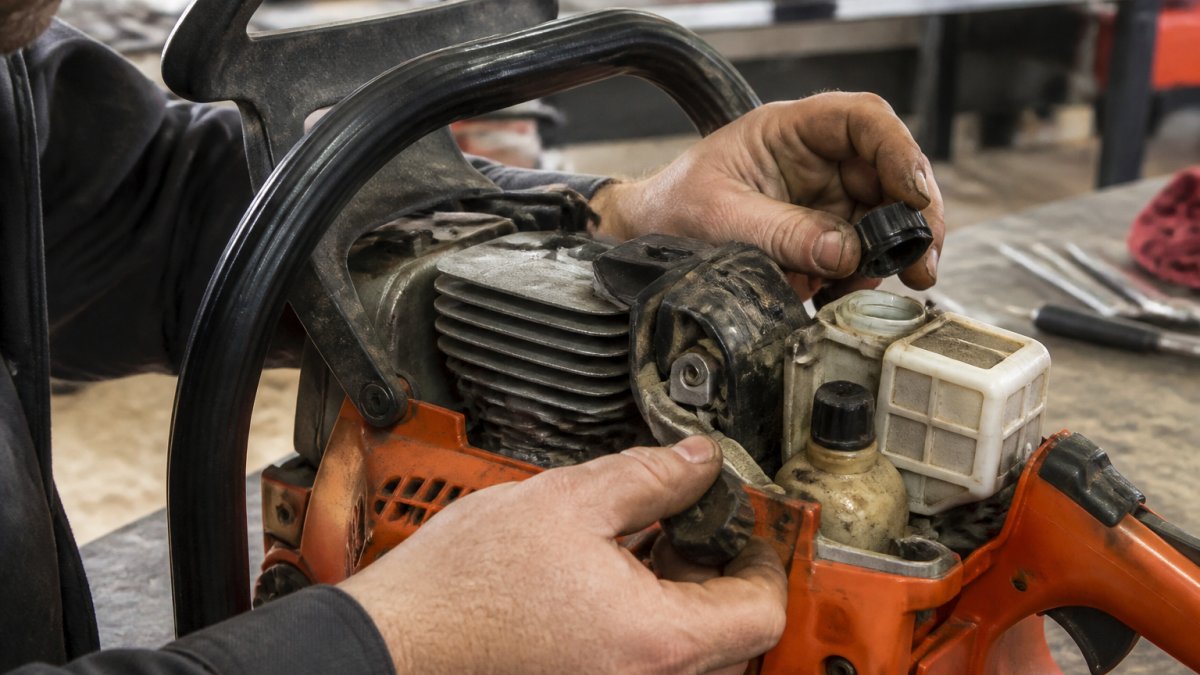
The engine performs better when you catch air filter clogs or spark plug fouling early.
Chainsaw Air Filter Cleaning and Replacement
Your chainsaw air filter keeps dust out of the engine. A clogged filter starves it of air, making it run rough and burn excess fuel.
Remove the air filter cover, usually held by a single bolt or clip, and inspect the foam or paper element; if it looks gray or black with embedded dirt, clean or replace it.
For foam filters:
- Tap gently against your palm to dislodge loose dust
- Wash with warm soapy water and squeeze dry
- Let it air-dry completely before reinstalling
- Replace every 12 months or after 50 hours of use
For paper filters:
- Tap gently to remove surface dust
- Do not wash paper filters, they'll fall apart
- Replace every season or after 100 hours of use
A clean chainsaw air filter improves fuel economy and engine response, so the saw starts easier and idles more smoothly.
Chainsaw Spark Plug Maintenance and Inspection
The spark plug ignites fuel inside the engine. A fouled or worn plug makes your saw hard to start and prone to stalling.
Twist off the spark plug wire and unscrew the plug with a socket wrench. The electrode tip should be tan or light brown; black buildup means too rich (too much fuel), white or burned electrodes mean too lean (not enough fuel).
Replace the spark plug every season or after 100 hours. Install a new one hand-tight, then snug it with your wrench, do not over-tighten.
Chainsaw spark plug condition reveals engine health. If a new plug blacks up within hours, the carburetor needs cleaning or the fuel mix is wrong.
Check the gap before installation; most chainsaws need 0.5 millimetres. Your replacement plug should come pre-gapped, but verify it matches your manual.
Chainsaw Fuel Mix and Storage Best Practices
Two-stroke chainsaw engines have no separate oil sump; the oil lubricating the crankshaft bearings, piston, and cylinder walls rides in the fuel itself.
Confirm your model's ratio before you mix. Many modern saws specify 50:1 (50 parts gasoline to 1 part two-stroke oil), but older or professional models may call for 40:1 or 32:1.
Measure, don't eyeball. Use a dedicated container with clear graduations. Most "carburetor problems" technicians see trace back to a lean mix, too little oil, which raises friction and heat. Pour oil in first, add half the gasoline, swirl, then top up.
Use the right oil. Air-cooled two-stroke oil is formulated for a chainsaw's higher operating temperatures; marine or water-cooled oil is not a substitute. Quality oil also carries detergents that keep ring grooves and the exhaust port cleaner.
Understand what stale fuel does. Gasoline degrades within weeks of mixing; lighter fractions evaporate, leaving compounds that oxidize into gum and varnish.
Storage rules that actually matter:
- Mix only what you will burn within about 30 days; buy smaller quantities rather than storing a large can.
- Keep mixed fuel in a sealed, clearly labeled container, out of direct sunlight and away from temperature swings.
- Prefer ethanol-free gasoline where it is available; if you must use ethanol-blended fuel, shorten the storage window.
- Never top up an old mix with fresh fuel and assume it is refreshed, drain and start clean.
For storage longer than 30 days:
- Drain the tank completely, or add a fuel stabilizer to fresh mix and run it through the carburetor.
- Run the engine until it stops on its own so the fuel lines and carburetor bowl empty.
- Store the saw dry and cool with the cap loose enough to vent, and add fresh mix only when you are ready to run it again.
Chainsaw Carburetor Cleaning and Adjustment
The carburetor mixes air and fuel in the right proportions. When dirty or out of adjustment, the engine won't start, idles rough, or stalls under load.
A clogged carburetor is often caused by stale fuel left during storage. If the saw won't start or runs poorly, cleaning it is usually the first fix.
To clean the carburetor:
- Remove the air filter and fuel line
- Locate the carburetor bowl, it's the metal cup at the base
- Unscrew the bowl bolt and let fuel drain into a container
- Spray carburetor cleaner through all passages to dissolve varnish
- Reinstall the bowl with a new gasket and refill with fresh fuel
Carburetor adjustment requires three small screws labeled L (low speed), H (high speed), and T (idle). These control fuel mixture at different RPMs. Adjustment is precise work; if you're not confident, have a professional handle it.
Guide Bar and Chain Care for Engine Longevity
The guide bar and chain put load on the engine. A dull chain makes it work harder and overheat, and poor bar oil flow starves the chain of lubrication.
Inspect the chain tension before every use. The chain should pull away from the bar slightly but snap back into place when released.
Check the bar oil level and top up with fresh oil, using the correct viscosity for your climate: thinner in cold weather, thicker in warm. Low bar oil causes the chain to overheat and wear fast.
Sharpen the chain every 5-10 hours of use or when it starts pulling to one side.
Inspect the guide bar for damage. If the nose sprocket is worn or the bar is bent, replace it. A damaged bar throws the chain off center, which damages the engine bearings over time.
Seasonal Storage and Off-Season Engine Protection
Proper storage extends your chainsaw engine's life by years. The biggest threat is fuel degradation and internal corrosion.
Before winter storage:
- Drain the fuel tank completely or add fuel stabilizer to the mix
- Run the engine until it stops to clear the carburetor and fuel lines
- Change the air filter if it looks dirty
- Inspect the spark plug and replace if needed
- Wipe down the exterior to remove dirt and debris
- Store in a dry place away from moisture and temperature swings
If you store with fuel inside, ethanol absorbs moisture from the air, corroding the carburetor and fuel tank. Draining is always safest.
Before spring startup:
- Install a fresh spark plug
- Clean or replace the air filter
- Fill the tank with fresh fuel mix
- Prime the engine if it has a primer bulb
- Start slowly and let it warm up before cutting
If your saw won't start after storage, the carburetor is likely clogged. Cleaning it (as described in the carburetor section) will usually restore function.
Troubleshooting Common Chainsaw Engine Problems
Troubleshoot in a fixed order, cheapest and most likely first, and stop when a step resolves the symptom.
Step 1, Confirm the basics. Fresh, correctly mixed fuel; a clean air filter; a gapped, unfouled spark plug; a sharp, correctly tensioned chain.
Step 2, Check for spark. Remove the plug, reconnect the wire, ground the plug body against the cylinder, and pull the starter.
Step 3, Check fuel delivery. Confirm fuel reaches the carburetor by inspecting the fuel filter in the tank and the fuel line for cracks, hardening, or air bubbles.
Step 4, Read the plug. A tan or light-brown electrode indicates a healthy mixture. Black, sooty buildup suggests too much fuel or a restricted air path.
Symptom guide:
- Won't start or hard to start: check spark first, then fuel freshness and ratio, then the carburetor. If the plug is wet with fuel and there is spark, the engine is likely flooded; clear it and retry.
- Starts then dies: often a fuel delivery restriction or a carburetor that needs cleaning. Check the fuel filter and lines before adjusting screws.
- Stalls under load: typically lean. Verify mix accuracy, fuel filter condition, and that the high-speed circuit is not restricted. Do not simply open the H screw to compensate for a clogged filter.
- Rough idle or excessive vibration: fouled plug, dirty air filter, or a loose or damaged mount. Rule out the simple causes before suspecting internal wear.
- Overheating: check bar oil level and flow, chain sharpness and tension, and that the cooling fins and muffler screen are clear. A saw that overheats under normal load needs to be stopped, not pushed.
- Loss of power: clogged air filter, tired plug, incorrect mix, or a partially blocked exhaust screen. Work through them in that order.
- Fuel leaks: inspect the cap, the tank vent, and the fuel lines. Cracked lines are replaced, never taped.
Maintenance versus repair, know the line. Cleaning or replacing the air filter, plug, fuel filter, and fuel lines, adjusting chain tension, and sharpening the chain are routine owner tasks.
Conclusion
Learning how to maintain chainsaw engine performance keeps it reliable and extends its working life. Regular inspection, clean fuel, fresh spark plugs, and proper storage prevent most common problems.
The steps in this guide take under an hour per season and cost far less than emergency repairs. Start with pre-use checks, then add seasonal maintenance as your routine hardens.
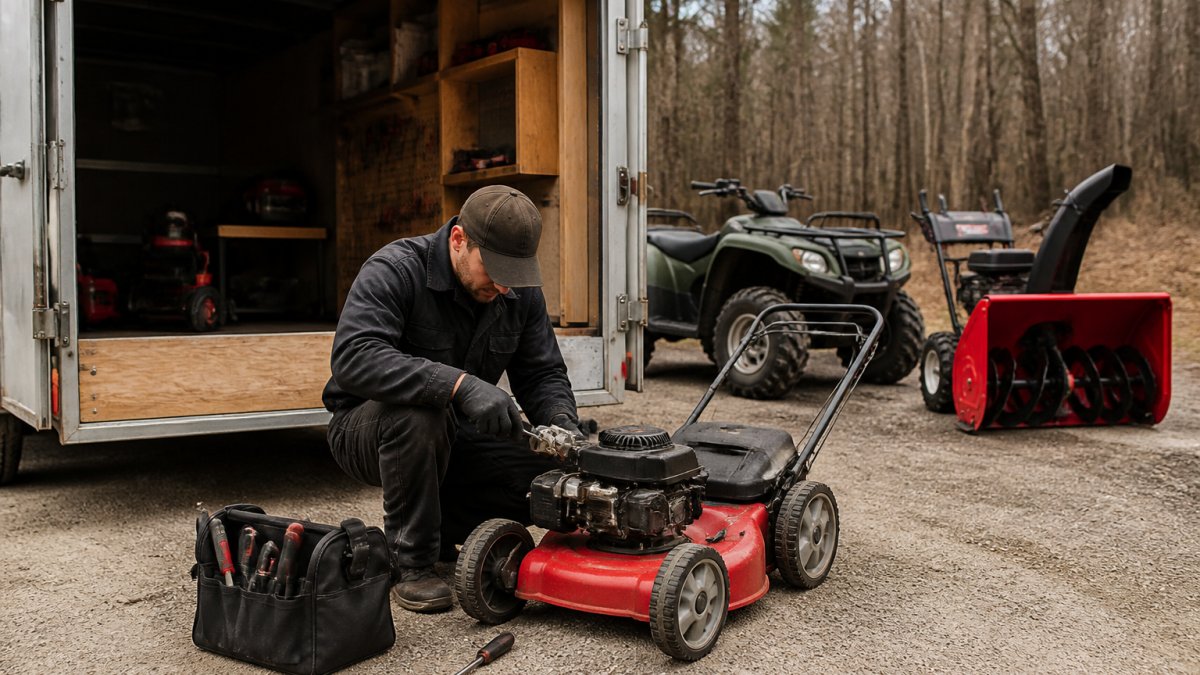
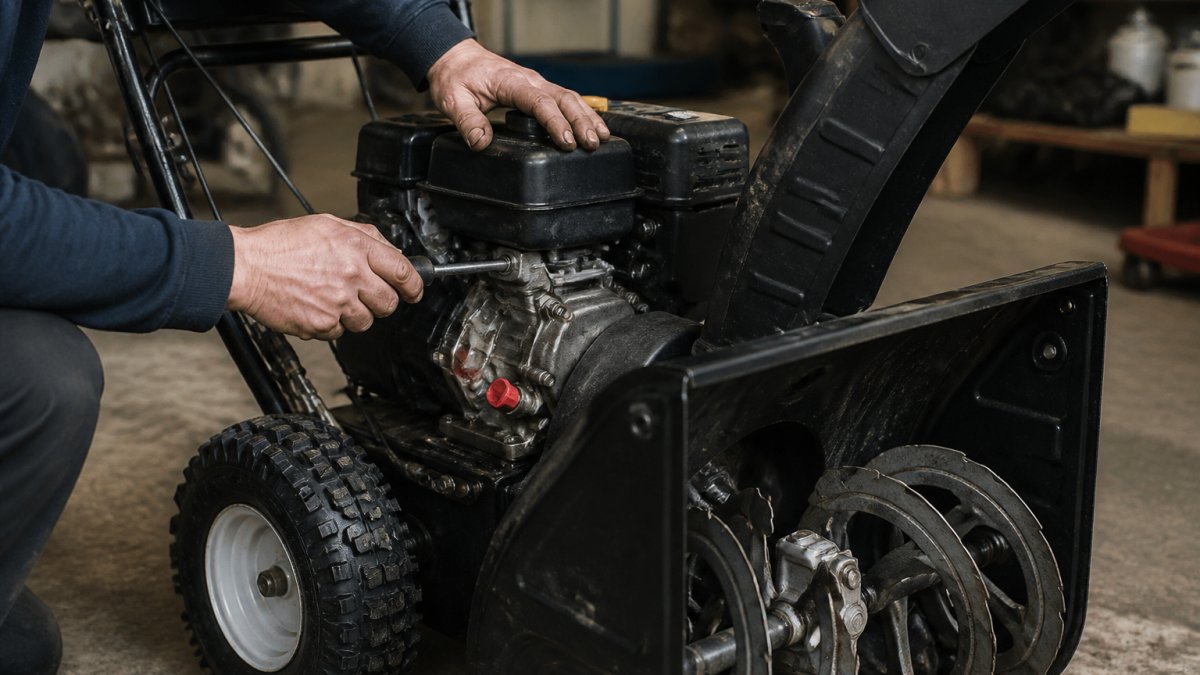
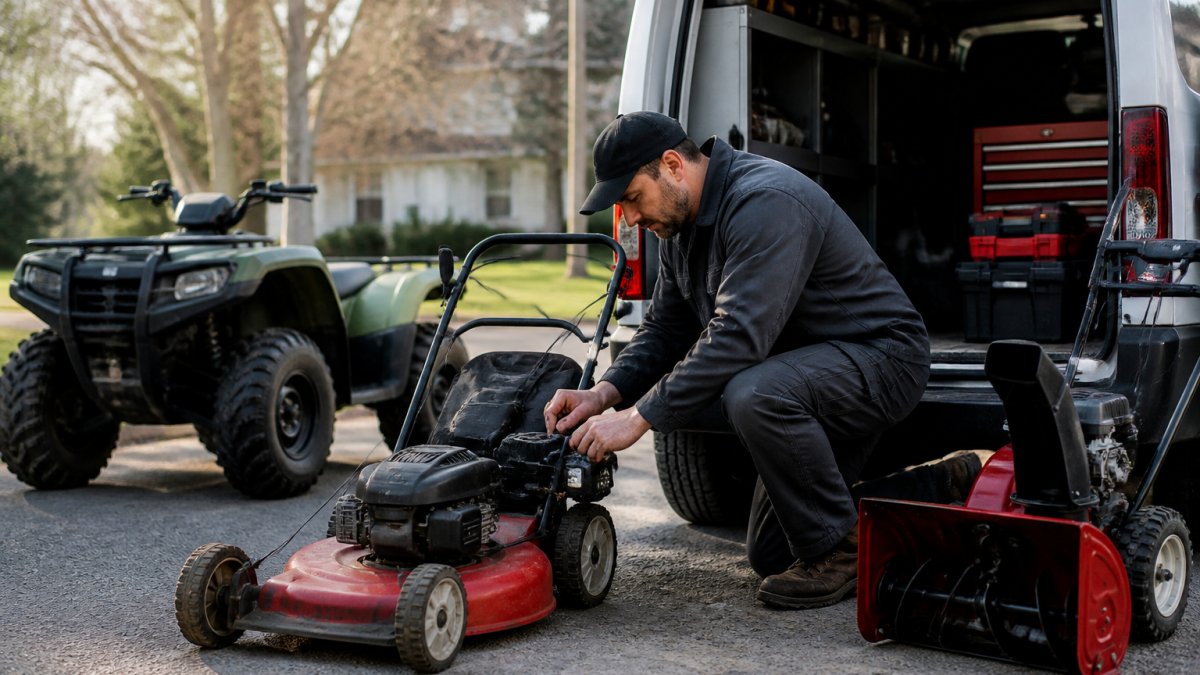
When you need professional help, carburetor cleaning, engine troubleshooting, or full seasonal service, DHC provides expert small engine repair tailored to your equipment. We specialize in chainsaws, lawn mowers, ATVs, and snow blowers, with mobile service available to minimize your downtime. Contact us for a diagnosis and reliable repair.
Frequently Asked Questions
How often should you service a chainsaw engine?
Most two-stroke chainsaw engines benefit from routine maintenance every 20 to 40 operating hours, or at least twice per season for regular users. Before each use, inspect the fuel mixture, air filter, and spark plug. Annual deep servicing, including carburetor cleaning and cooling-fin inspection, extends engine life and prevents mid-job failures. Professional servicing is recommended if you notice starting difficulty, poor idling, or overheating.
What is the correct fuel-to-oil ratio for a two-stroke chainsaw engine?
Most modern chainsaws require a 50:1 fuel-to-oil ratio, though some models specify 40:1. Always check your owner's manual for the exact specification. Use high-quality two-stroke engine oil, not automotive oil. Measure precisely: for 50:1, mix 2.6 millilitres of oil per litre of unleaded fuel. An incorrect ratio causes carbon buildup, spark plug fouling, and engine seizure.
How do you know if a chainsaw air filter needs cleaning or replacement?
Inspect the air filter every 5 to 10 operating hours. A clogged air filter appears dark, discolored, or packed with debris. If the filter is reusable foam or mesh, clean it gently with warm soapy water and let it dry completely. If it is paper-based and heavily soiled, replace it. A dirty air filter restricts airflow, causing the engine to run rich and foul the spark plug.
Should you drain fuel from a chainsaw before winter storage?
Yes. Stale fuel gums up the carburetor and fuel lines, making spring startup difficult or impossible. Before storing your chainsaw for winter, run the engine until it stops to use remaining fuel, or drain the fuel tank and carburetor completely. Store the saw in a dry location with the fuel cap and oil cap secured. For engines stored more than 30 days, consider using fuel stabilizer or switching to fresh fuel when you restart.