 blog
blog
Mobile Small Engine Repair Service Pricing Guide
Table of Contents
- What Mobile Small Engine Repair Service Pricing Includes
- Understanding Small Engine Repair Estimates
- Small Engine Diagnostic Fees Explained
- Mobile Mechanic Travel Fees and Service Charges
- Lawn Mower Repair Service Cost Breakdown
- Cost Factors That Affect Your Final Bill
- Repair Versus Replacement: When to Invest in Service
- Getting Transparent Pricing for Mobile Repair Services
- Frequently Asked Questions
Last Updated: October 18, 2026
What Mobile Small Engine Repair Service Pricing Includes
Mobile small engine repair service pricing reflects the complexity of bringing professional diagnostics and repair to your equipment. You're paying for expertise, travel, and the convenience of getting your lawn mower, snow blower, or ATV back in service without hauling it across town.
At DHC, we break down mobile small engine repair service pricing into clear components so you understand what drives your final bill: diagnostic work, labour time, replacement parts, travel fees, and any emergency surcharges.
Diagnostic and assessment work
A proper diagnosis is where quality mobile repair begins. The mechanic inspects your equipment on-site, identifies the problem, and provides an estimate before any work starts.
What gets assessed: engine compression, fuel system function, spark plug condition, air filter cleanliness, oil level and quality, carburetor settings, and visible damage or wear. A thorough diagnostic addresses the actual problem, not just the symptom.
Labour and service delivery
Labour is the largest cost component in most mobile small engine repair jobs. Technicians charge by the hour or by the job, and rates vary with experience, equipment complexity, and local market conditions.
The hourly rate covers expertise, tools, insurance, and vehicle costs, plus the convenience of on-site service.
Understanding Small Engine Repair Estimates
A small engine diagnostic fee is charged to inspect your equipment and identify what needs fixing.
Ask upfront: "What does your diagnostic fee cover, and will it be credited toward repairs if I move forward?" This prevents misunderstandings and helps you compare pricing fairly.
A quality diagnostic tells you what's wrong, what it will cost, and how long the repair will take, so you can decide confidently rather than accept vague promises.
Small Engine Diagnostic Fees Explained
The small engine diagnostic fee compensates the technician for identifying the root cause of your equipment's failure, a methodical process requiring experience and often specialized tools.
What a diagnostic includes: engine starting and running assessment, visual inspection of major components, fuel system testing, ignition system checks, and a written summary with repair recommendations. This prevents the "fix one thing and hope" trap.
Mobile Mechanic Travel Fees and Service Charges
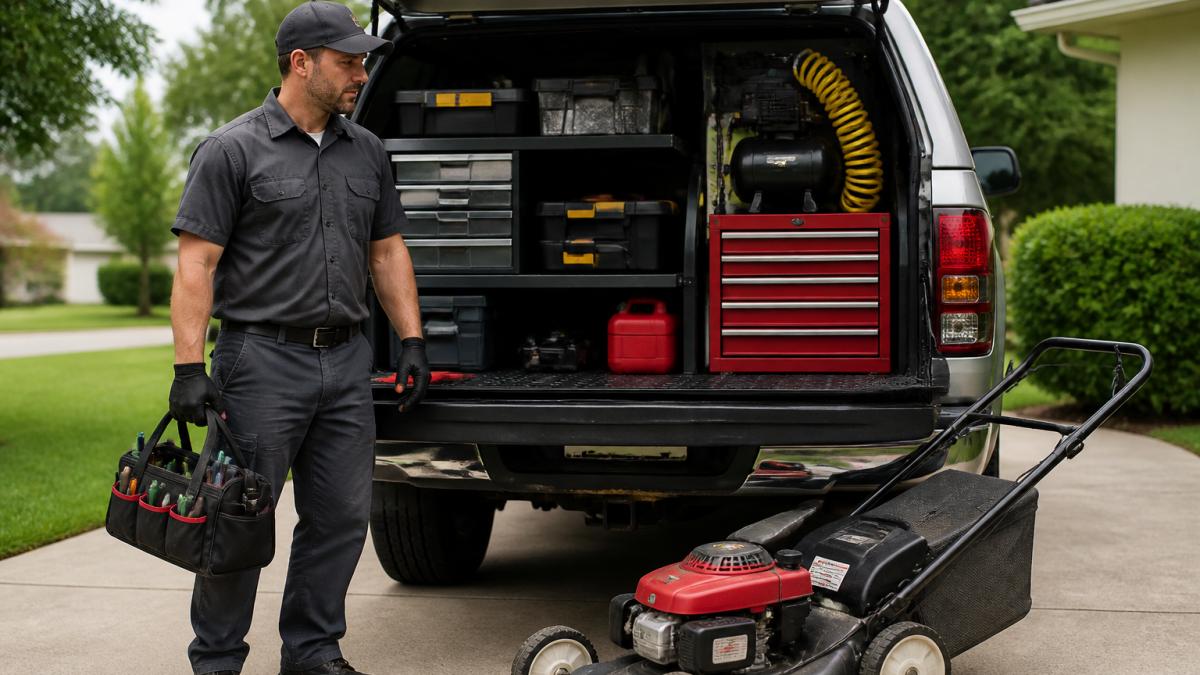
Travel is the line item that makes mobile pricing hard to compare. Two providers can advertise the same hourly rate and still land far apart on the same job, because one folds travel into a flat call-out fee and the other bills a minimum labour block plus a distance surcharge.
The four fee models you will encounter
- Flat service call fee. A fixed charge covers the drive and the first portion of on-site time. Simple to compare, but check whether the diagnostic is inside that fee or billed on top.
- Minimum labour charge. The provider bills a minimum block, commonly one hour, even if the repair takes twenty minutes. This is the most common model for mobile work because short jobs otherwise lose money once drive time is counted.
- Travel fee plus hourly from arrival. The clock starts when the technician reaches your address. Fair on long jobs, expensive on short ones.
- Distance-banded surcharge. A core zone is served at the standard rate; addresses beyond it pay a banded premium that steps up with drive time.
Calculating your floor cost before you book
Your floor cost is the least you will pay if you approve the repair. Work it out before the technician arrives:
- Service call fee
- Plus diagnostic fee
- Plus the minimum labour block at the quoted hourly rate
- Plus applicable taxes
If the floor cost exceeds the value of the repair, you should know that on the phone, not on the invoice.
Service-area boundaries and surcharges
Providers publish a primary coverage zone and price beyond it in bands, with a modest premium just outside the zone and a larger one for addresses adding significant drive time. Ask where the standard zone ends and whether the surcharge is flat or a percentage.
What travel fees do not cover
Travel fees pay for the drive, not the work. They typically exclude parts, major repairs discovered during diagnosis, shop-level machining, pickup and delivery, and follow-up visits. Confirm whether a return visit for an ordered part is billed as a new service call, a common source of invoice disputes.
Lawn Mower Repair Service Cost Breakdown
A lawn mower repair estimate is only useful if it separates what you are paying for. Most quotes bundle the service call, labour, parts, and add-ons, and the advertised tune-up price usually covers only the first two plus a fixed parts kit. The table below shows how a typical mobile quote is structured; treat the ranges as planning bands.
| Cost line | What it covers | How it is usually charged | Typical planning band |
|---|---|---|---|
| Service call / travel | Technician's drive to your address | Flat fee, sometimes waived inside a core zone | Low flat fee to moderate flat fee |
| Diagnostic | Inspection and written findings | Flat fee, often credited toward approved repairs | Small flat fee |
| Labour | Hands-on repair time | Hourly, or book time per job | Hourly rate set by provider |
| Parts | Plugs, filters, blades, belts, carb kits | At cost plus a markup, or bundled in a kit | Varies by part |
| Add-ons | Blade sharpening, oil disposal, pickup, rush | Per item or percentage | Itemized on invoice |
| Taxes | Federal and provincial sales tax | On parts and labour as applicable | Applied to subtotal |
Cost ranges by equipment type
Pricing scales with the machine, not just the fault. A push mower is a quick bench job; a lawn tractor is a half-day job with panels to remove and belts to route.
Cost ranges by repair severity
Severity matters more than machine size. The diagnostic is what moves a job from one band to the next. A quote before diagnosis is a guess; a quote after diagnosis should name the band and the parts.
Seasonal tune-ups and package pricing
Spring tune-ups are the most standardized job in the category, which is why providers publish package prices. A seasonal package typically includes spark plug replacement, air filter service, oil change, fuel system inspection, blade sharpening or replacement, and an engine test. Fall storage tune-ups add fuel stabilization and winterization.
Package pricing is usually lower than paying per line, but check what the package excludes, many do not include blade replacement, carburetor work, or parts beyond the kit.
Emergency and same-day repairs
Same-day or after-hours requests usually carry a premium over scheduled rates because they displace booked work. Confirm whether it is a flat rush fee or a percentage uplift, and whether it applies to the service call, the labour, or both.
Cost Factors That Affect Your Final Bill
Several variables influence the final invoice beyond the base hourly rate and travel fee. Understanding them helps you anticipate costs and avoid surprises.
Equipment type and age: A 5-year-old push mower requires different diagnostics and parts than a 20-year-old lawn tractor.
Repair complexity: A spark plug replacement takes 15 minutes, a carburetor rebuild 2-3 hours, and an engine overhaul a full day or more.
Parts availability: Common parts like spark plugs, air filters, and oil are stocked by most providers. Specialty parts for less common equipment may need ordering, adding days and cost.
Damage extent: A simple clog differs vastly from internal engine damage.
Repair Versus Replacement: When to Invest in Service
At some point, repair costs approach or exceed replacement value. Knowing when to repair and when to replace prevents throwing good money after bad.
A general rule: if repair costs approach or exceed replacement value, replacement often makes financial sense.
There are exceptions. If your equipment is reliable outside this one issue and you expect years of use ahead, repair makes sense even at higher percentages.
Age and maintenance history matter.
Consider parts availability and future service. Discontinued models become expensive to maintain long-term, while current models with broad parts availability are cheaper to keep running.
Getting Transparent Pricing for Mobile Repair Services
Transparent pricing starts with clear communication before the technician arrives.
When you call for a quote, ask these questions:
- What's included in your service call fee?
- Do you charge separately for diagnostics, and is that fee credited toward repairs?
- What's your hourly labour rate?
- Do you have a minimum charge or minimum labour requirement?
- Are there service area surcharges, and what's your primary coverage zone?
- Do you charge extra for emergency or same-day service?
- Are parts marked up, and by how much?
- Will you provide a written estimate before starting work?
A provider who answers these questions clearly is likely to deliver transparent invoicing; one who is vague or defensive about pricing is a warning sign.
Written estimates are non-negotiable. Before any work begins, you should have a document stating the problem, proposed repair, labour hours and rate, parts needed, and total estimated cost.
At DHC, we prioritize upfront transparency because equipment downtime costs you money. A clear estimate means no surprises when the invoice arrives.
Frequently Asked Questions
What factors affect the cost of mobile small engine repair service pricing?
Equipment type, repair complexity, and service location all influence the final cost. Lawn mower tune-ups differ from snow blower repairs or ATV servicing. Emergency repairs or same-day appointments typically cost more than scheduled maintenance. Travel distance and whether you need parts replacement also impact the total bill. Request a free quote that outlines labour, diagnostic fees, travel charges, and estimated parts costs so you understand what drives your final invoice.
Do mobile repair services charge a travel fee?
Yes, most mobile mechanic travel fees cover the technician's time and fuel to reach your location. The mobile mechanic travel fee varies based on distance from their service area and may increase for rural or remote sites. Some providers include travel in their service call charge, while others list it separately. Ask upfront whether the travel fee applies to your address and whether it's waived if you proceed with repairs. This transparency helps you budget accurately.
Should I repair or replace my lawn mower?
Compare the lawn mower repair service cost against the price of a new machine. If repair costs approach or exceed replacement value, replacement often makes financial sense. However, preventative maintenance through regular tune-ups extends equipment life significantly and costs far less than emergency repairs. Get a detailed repair estimate first, then decide. For commercial operators, equipment downtime is costly, so quick mobile service often justifies the investment over DIY fixes or shop delays.
What should a small engine diagnostic fee cover?
A small engine diagnostic fee typically includes a thorough inspection to identify the root cause of performance issues, testing of fuel systems, ignition components, and engine compression, and a written report of findings. This small engine diagnostic fee should result in a clear repair estimate before work begins. Some providers credit the diagnostic cost toward repairs if you proceed, while others charge it separately. Transparent providers explain exactly what the diagnostic covers so you know what to expect on your final bill.
When your lawn mower, snow blower, or ATV needs professional attention, mobile small engine repair service pricing should be predictable and fair. DHC delivers expert diagnostics and repair on-site, with transparent estimates that break down labour, parts, travel, and any service fees. Get in touch for a quote and learn how professional mobile repair keeps your equipment running reliably all season long.